- House the Market?
- Posts
- no is a complete sentence
no is a complete sentence
bay area prices, $200B interest rate hack, and why ‘affordability’ is still a mirage

Michaela To
January 14, 2026


Hello from 2026!
I’m not really a New Year’s resolutions person (anymore). I know myself well enough to assume that by now, I’d have already forgotten them and circled right back to my usual delusions of personal growth. So this year, instead of promising I’ll finally read more books (unless my daughter’s picture books count?) or pick up ceramics again (open to commissions for lopsided vases and bowls), a good friend (aka a complete stranger online) suggested something else: rejection therapy. For character development.
She set a goal to reach 1,000 no’s in 2026, and I figured I’d join in because why not get my ego bruised and battered this year. Maybe not 1,000 (I’m ambitious, not psychotic), but 500 feels doable.
Two weeks in, I had a not-so-surprising epiphany: real estate is hearing no, professionally. The rejections come at you fast out here. And while I’m not totally immune yet, each rejection reveals something — where the leverage lives, what people actually care about, and what’s more flexible than it seems.
So far, this little experiment has already delivered a few tiny wins. On a small renovation project, I asked the contractor for a few thousand dollars off his quote. He laughed in my face, said absolutely not… and then knocked a couple hundred dollars off anyway. Progress!
I also decided to rejoin my barre studio after a two-year hiatus and, for science, shamelessly asked if I could get my first month back for free. After way too much back and forth, they actually said yes. See (literal) receipts below.
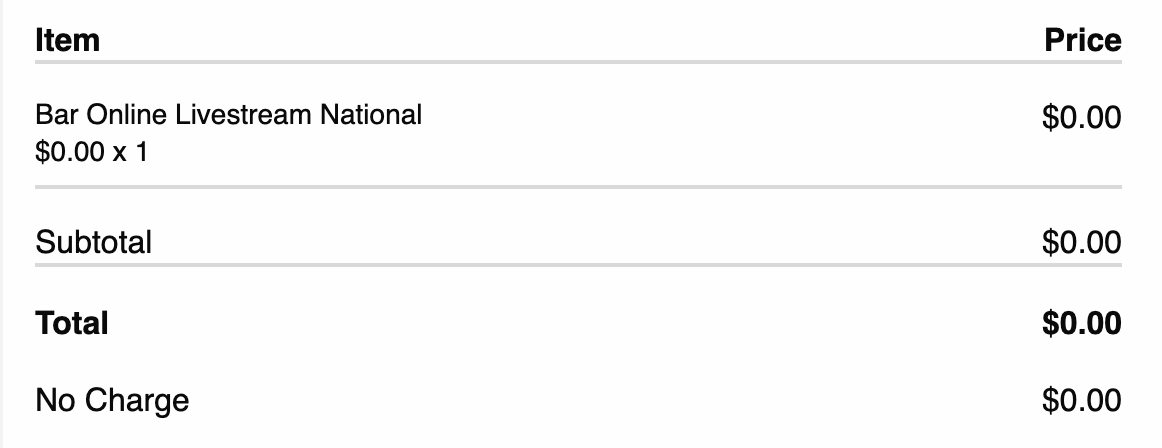
I haven’t gotten a hell no yet, which probably means I’m not asking for unreasonable enough things. Pushing boundaries has become my new favorite pastime. It also happens to be great practice for my day job.
So this year, I’m sending the uncomfortable text. Making the ridiculous ask. Starting the awkward conversation. Including the one where I ask if you’ve thought about buying or selling a home lately. 😅
You can say no. I’m collecting those now. (And putting them in my spreadsheet because turns out I am psychotic after all.)
2025 was SO last year (but let’s talk about it anyway)

when kourtney reminds you that 2025 is, in fact, over (source: giphy)
If you thought the Bay Area market finally fell apart in 2025… well, Redfin’s data did not get the memo.
San Jose held onto its crown as the most expensive major metro in the country. The median sale price averaged $1.62M, rose 3.3% year over year, and peaked at $1.7M in April. Homes moved fast too, averaging just 17 days on market. Expensive and decisive!
San Francisco followed at $1.52M, while everyone debated whether it’s “back.” Inventory barely budged, homes sold in about 3 weeks, and a quarter of purchases were made by investors. Good homes moved, while questionable ones waited, and condos were still a mixed bag.
Oakland landed around $930k, which nationally sounds crazy but locally feels totally normal. Inventory jumped 35.4% YoY, thanks mostly to sitting condos, yet homes still sold in 23.5 days as single-family homes did the heavy lifting. More choice didn’t mean cheaper, it just meant buyers had the luxury of being pickier.
The six most expensive metros in the U.S. were ALL in California. The takeaway: prices here are already high (duh), the good stuff is still scarce, and demand doesn’t even need to be crazy to keep things moving.
Also, based on nothing scientific except vibes and anecdotal evidence, 2026 already seems to be off to a hot start!
Only costs $200B to bring rates down

me, learning about bonds against my will (source: tenor)
If you can’t control the Fed, just take lots of shortcuts around them.
Last week, trump ordered Fannie Mae and Freddie Mac — the two government-backed giants behind most home loans — to buy up to $200 billion in mortgage bonds. (I, too, would like a government-sponsored shopping spree.)
The idea is that when they buy more of these bonds, fewer are left floating around. Scarcity pushes prices up, and when bond prices rise, mortgage rates tend to come down (or at least stop climbing so aggressively).
Markets liked this news, so rates went down and real estate stocks went up. For a brief, fever-dream moment, rates dropped below 6% for the first time in three years.
Supporters say this matters because the Fed has stepped back from buying mortgage bonds, and if no one fills that role, the market can get shaky. Critics are basically asking: how much is too much, is it worth the risk, and hellooo have we learned nothing from 2008? (direct quote, probably)
Also worth noting: the mortgage bond market is huuge. $200 billion is meaningful, but it’s not a magic wand. Still, for buyers looking right now, every little bit helps. Even a half-point drop can be enough to pull some people off the sidelines.
But of course, there’s a catch. Lower rates make borrowing easier, not homes more plentiful. So when cheaper money pulls a new wave of buyers into a market that’s already short on supply, we don’t get “affordable.” We get more competition. Which eventually leads to higher prices. Today you save on interest. (yay) Tomorrow you overpay for the house. (boo)
Remember 2021? That.
The villain is clear. The math is not.

me, explaining supply and demand into the void (source: giphy)
Okay, now for trump’s (other) new proposal: ban large institutional investors from buying more single-family homes. “People live in homes. Corporations don’t.”
Sounds great. Fewer Wall Street buyers. More homes for families and first-time buyers. A clearly labeled villain and a refreshingly simple fix. What’s not to love?
Buuuut institutions (owners of 100+ homes) only make up about 1% of the total single-family housing stock. And their footprint is even smaller in high-cost markets like the Bay Area. So it all sounds like a big deal, but it probably doesn’t change much. At least not outside of markets like Phoenix, Atlanta, Dallas, Charlotte, Houston, and Tampa, where large investors are way more concentrated.
Most housing markets are still shaped by regular buyers, mom and pop landlords, and zoning rules that make new construction painfully slow. A ban on tomorrow’s purchases doesn’t force anyone to sell today. It doesn’t unlock inventory. If the core problem is scarcity, you can’t regulate your way out of it without… you know, building more houses. So while this proposal scratches a very satisfying affordability itch, the real issue always comes back to the same old boring one: we didn’t build enough homes.
(hi, my name is michaela, and i’m a broken record.)
TELL A FRIEND (OR THREE)
Have a friend buying, selling, or just thinking about making a move? Bay Area or not, I can help! Reply with their info, and I’ll take it from there. And if you know someone who’d actually read this newsletter, forward away. Referrals, shares, and general hype-spreading earn you good karma, bragging rights, and my eternal gratitude. 💌